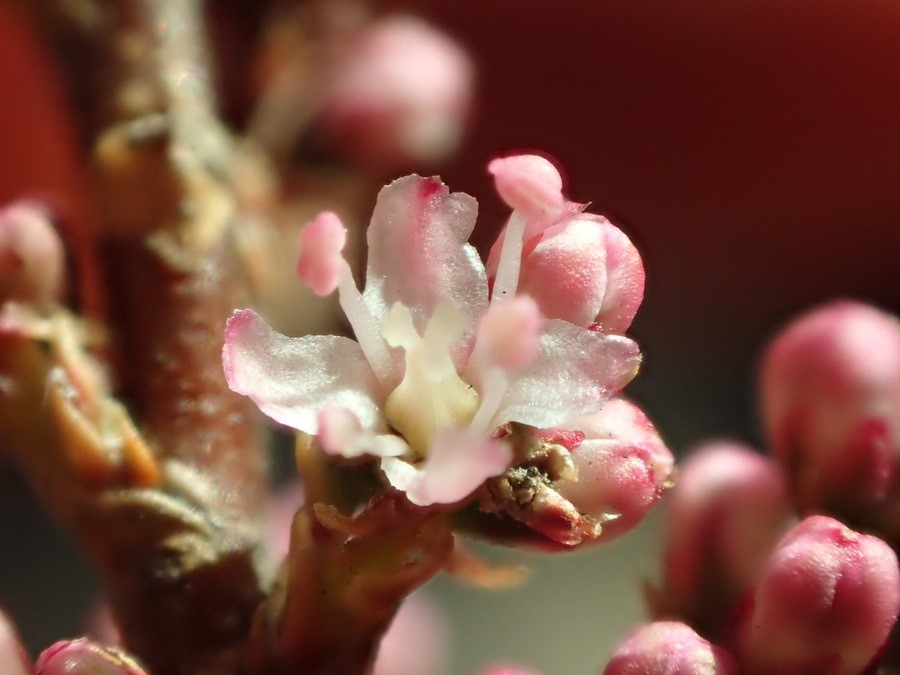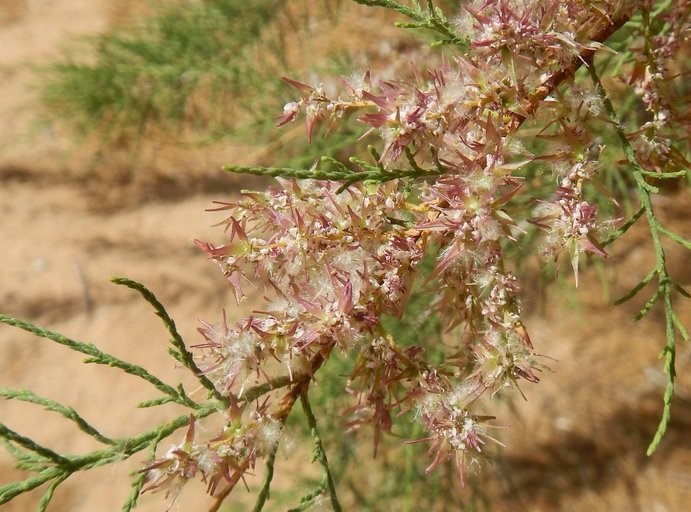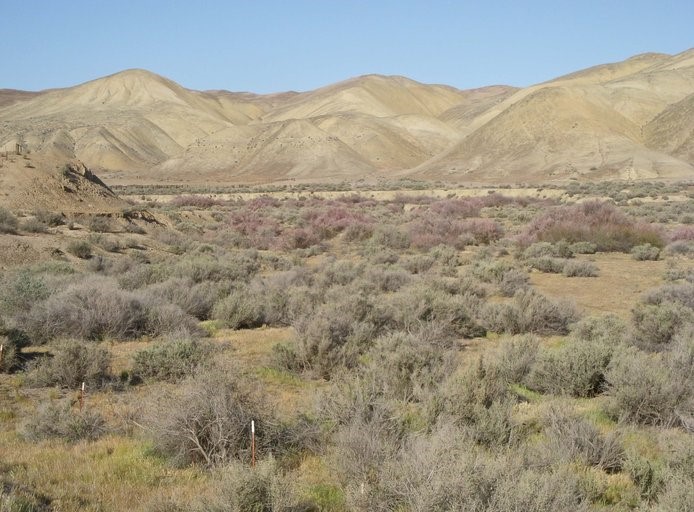
Tamarix parviflora
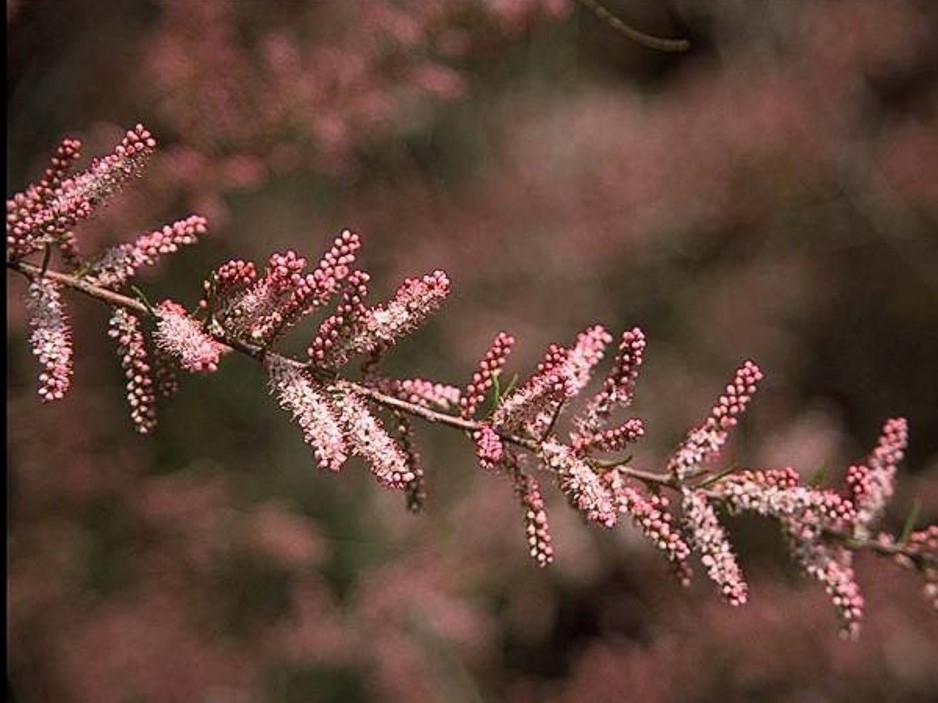
Synonyms: Tamarix cretica Bge., Tamarix lucronensis Sennen & Elias, Tamarix petteri Presl ex Bge., Tamarix rubella Batt., Tamarix tetranda auct. non Pall., others. Plants are sometimes sold in California as Tamarix africana Poir, which is a different species.
Common names: smallflower tamarisk
Tamarix parviflora (smallflower tamarisk) is a shrub or a tree (family Tamaricaceae) and can be found along streams and lake shores, throughout California. Tamarix species are associated with dramatic changes in geomorphology, groundwater availability, soil chemistry, fire frequency, plant community composition, and native wildlife diversity.
Cal-IPC Rating: High?CDFA Rating: -*?
Assessment(s)
Tamarix parviflora Plant Assessment Form - Information gathered by Cal-IPC on the impacts, rate of spread, and distribution of invasive plants in California. Does not include management information.
Species ID Card
Invasive Species ID Card - To support field identification of early detection species, Cal-IPC has designed a set of Species ID cards that can be downloaded, printed double-sided, and trimmed to size.
Special Reports
Tamarisk Brochure - from the University of California's Statewide Integrated Pest Management ProgramWeed Management Notes
- Management Notes - Information on management techniques and effectiveness from the University of California Cooperative Extension's Weed Research & Information Center.
Cal-IPC Newsletter Articles
- Alliance forms to guide tamarisk biocontrol in California. Norelli, Nicole. Vol 25, Issue 1
- Weed biological control agents approved for California. Pitcairn, Michael J.; Smith, Lincoln; Moran, Patrick. Vol 22, Issue 1
Cal-IPC Symposium Presentations
Presentations are linked where available. Where a presentation is not available, find more information by reading the abstract in the Cal-IPC Symposia Archive.
- Biological control agents of weeds in California: Overview of rearing, releases, and monitoring by the CDFA Biological Control Program. Moran, Patrick (2023)
- Complexity, constraints, and challenges of herbicidal and biological tamarisk treatment in the Mojave River watershed. Lair, Ken; Bell, Chuck; Lindgren, Jackie; Dudley, Tom (2020)
- Distribution and spread of tamarisk beetles (Diorhabda spp.) and their known and predicted effects on riparian ecosystems. Bloodworth, Ben (2020)
- Complexity, constraints and challenges of tamarisk treatment in the Mojave River watershed. Lair, Kenneth; Bell, Chuck; Lindgren, Jackie (2017)
- Native riparian revegetation success in controlled tamarisk and non-tamarisk sites in the Mojave River watershed, California. Lair, Kenneth (2017)
- Past, present, and future: Saltcedar (Tamarix spp.) and biological control in California. Norelli, Nicole (2017)
- California Alliance for Tamarisk Biocontrol – Biological Control with the Tamarisk Leaf Beetle (Diorhabda spp.). Norelli, Nicole; Dudley, Tom (2016)
Other Tamarix parviflora Information
- Bugwood - National database from the Center for Invasive Species and Ecosystem Health at the University of Georgia.
- CalPhotos - Images of plants taken mostly in California.
- Calflora - Distribution map and records of this species in California.
- CalWeedMapper - Distribution map of this species in California with ability to determine regional priorities.
- EDDMapS - Distribution of this species in North America.
- Jepson Interchange - Information on this plant's taxonomy, biology, and distribution from UC Berkeley's Jepson Herbarium.
- USDA PLANTS Database - Information on identification and distribution, with links to websites in individual states.
Additional photos