Conium maculatum
Common names: poison-hemlock
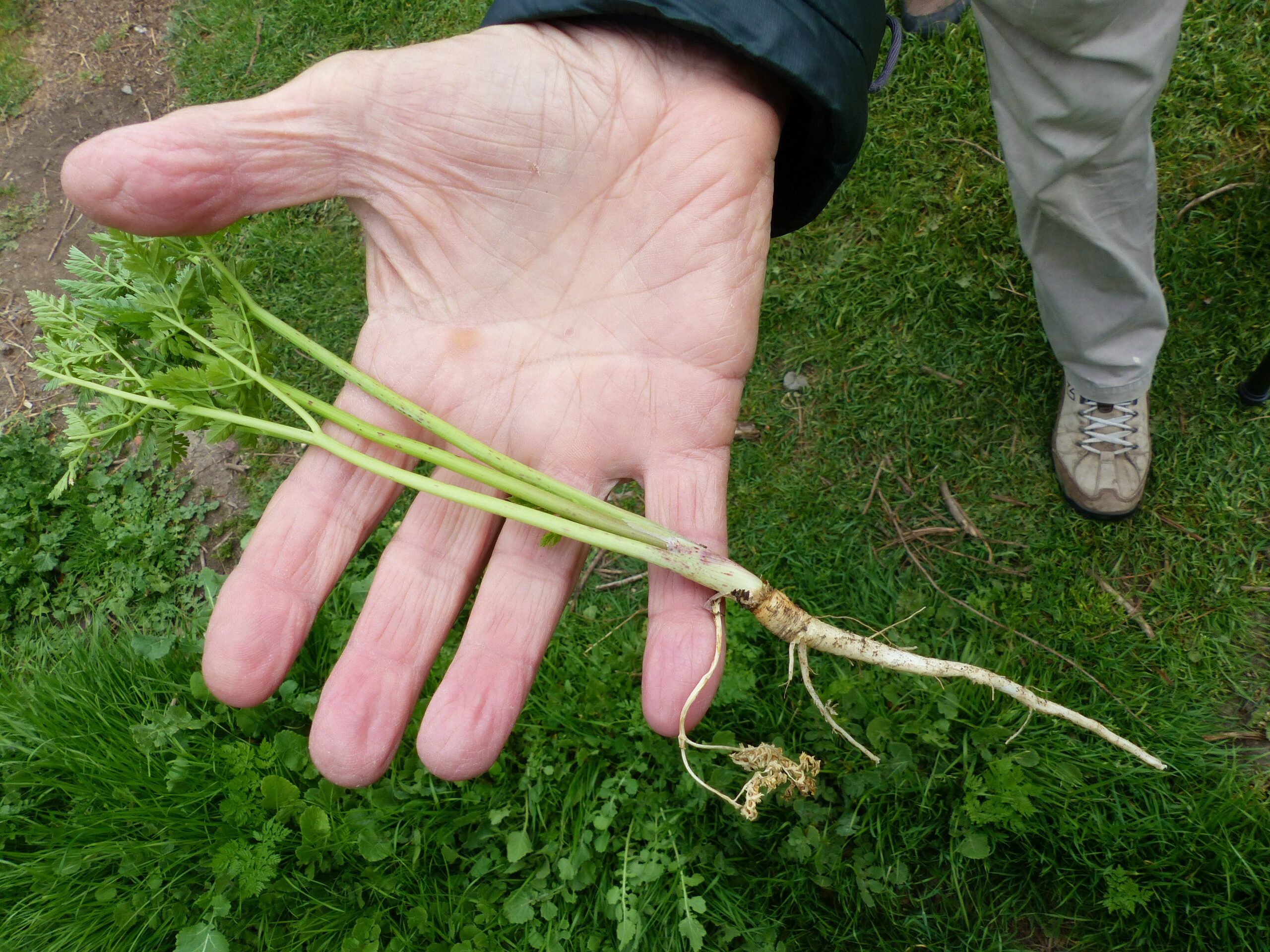
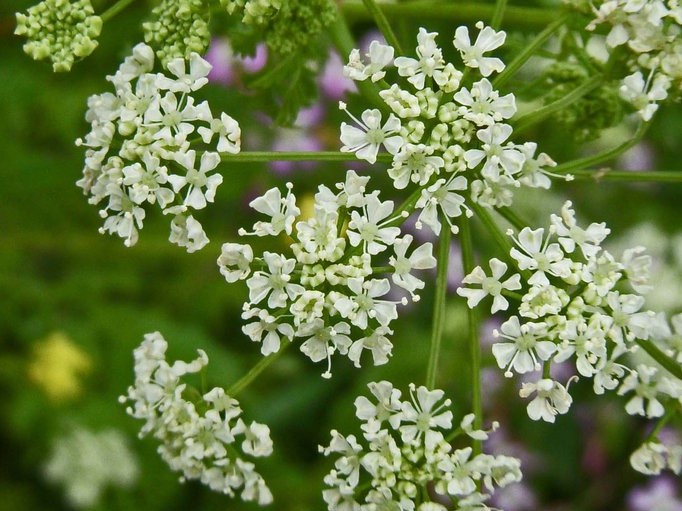
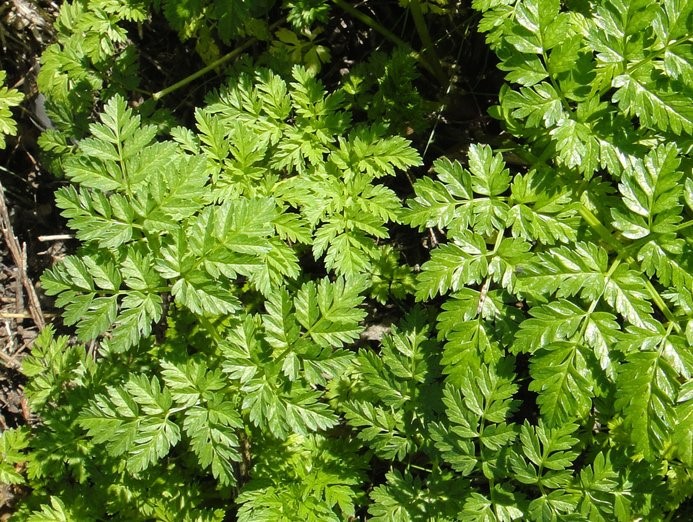
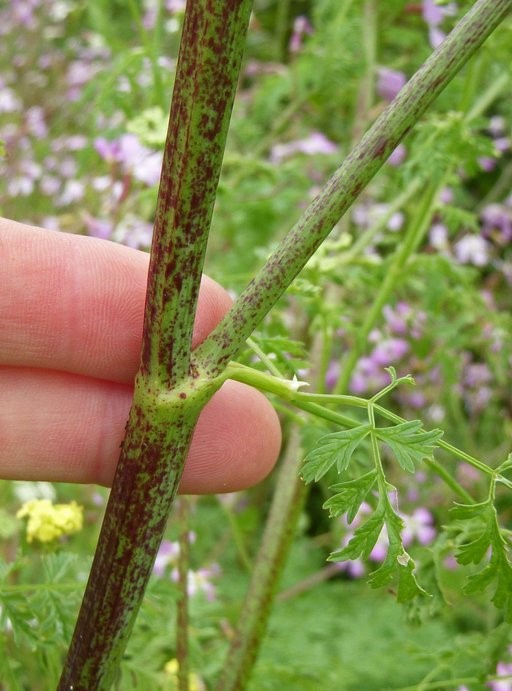
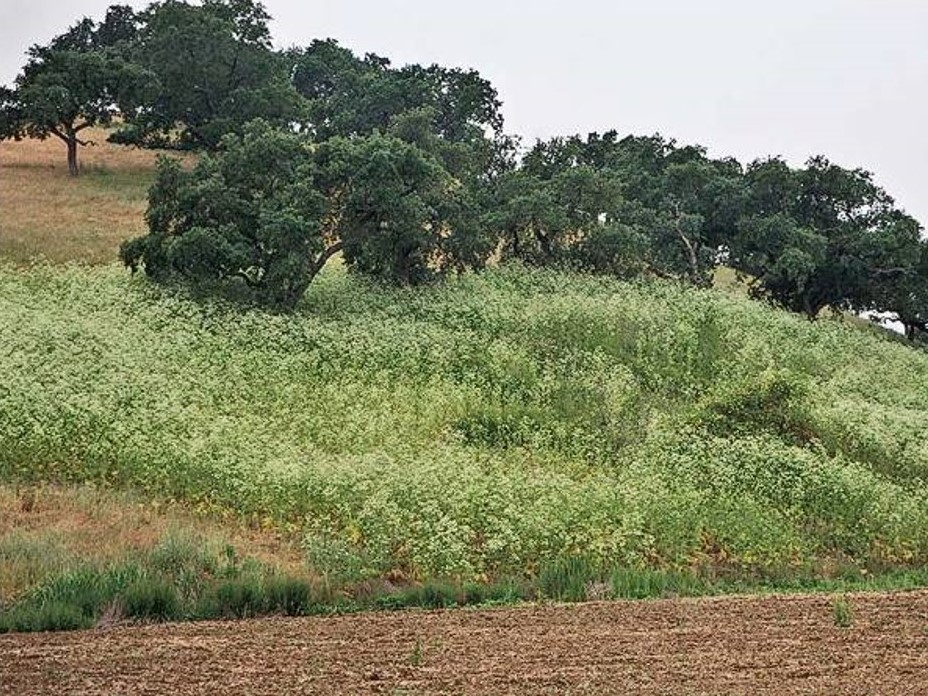
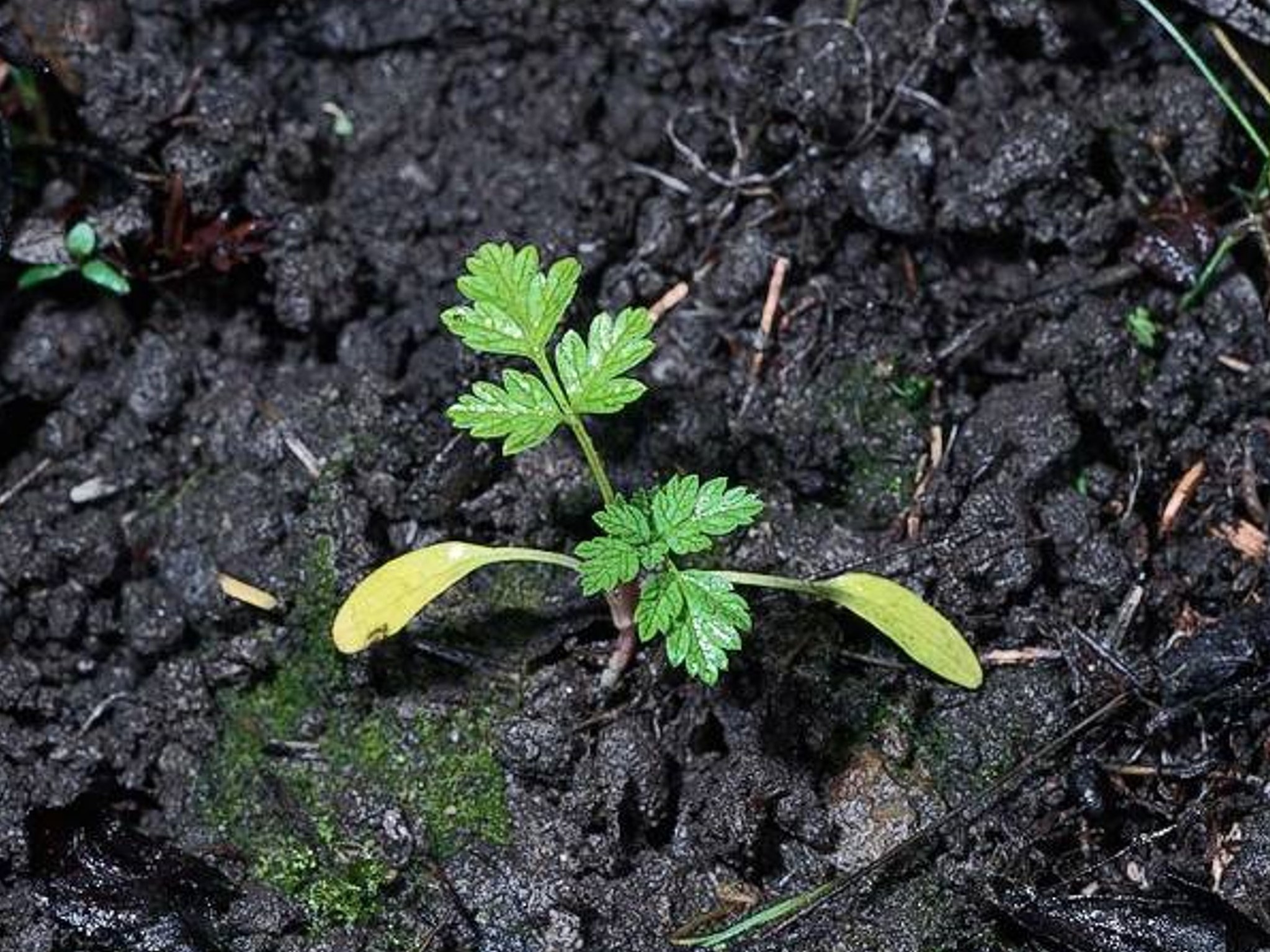
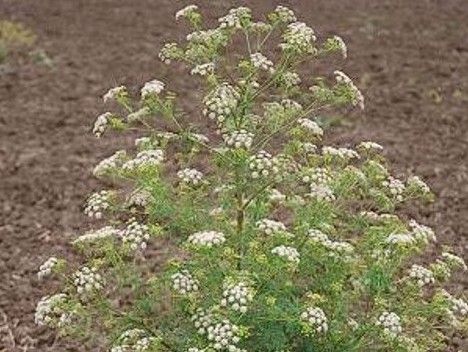
Conium maculatum (poison-hemlock) is a biennial forb (family Apiaceae). Poison-hemlock has spread throughout California in areas below 5,000 feet (1,500 m) elevation, excluding the Great Basin and Desert provinces and is commonly found in dense patches along roadsides and fields. It also thrives in meadows and pastures and is occasionally found in riparian forests and flood plains, but prefers disturbed areas. All parts of poison-hemlock are toxic to humans and animals when ingested; handling plants can cause contact dermatitis in some people. Conium maculatum grows 3-8 ft. (0.9-2.4 m) tall. Stems are stout, hollow, ridged, and purple-spotted. C. maculatum has a thick, white taproot that may easily be mistaken for wild parsnips. Poison-hemlock can spread quickly after the rainy season in areas that have been cleared or disturbed. Once established, it is highly competitive and prevents establishment of native plants by over-shading. It is native to Africa, temperate and tropical Asia and Europe.
Cal-IPC Rating: Moderate?CDFA Rating: None?
Assessment(s)
Conium maculatum Plant Assessment Form - Information gathered by Cal-IPC on the impacts, rate of spread, and distribution of invasive plants in California. Does not include management information.
Species ID Card
Invasive Species ID Card - To support field identification of early detection species, Cal-IPC has designed a set of Species ID cards that can be downloaded, printed double-sided, and trimmed to size.
Weed Management Notes
- Management Notes - Information on management techniques and effectiveness from the University of California Cooperative Extension's Weed Research & Information Center.
Cal-IPC Newsletter Articles
- Roundup of Arundo projects reveals commitment, strategic weakness. Kelly, Mike. Vol 07, Issue 2
- Results of the CalEPPC questionnaire at Symposium ’98 in Ontario. DiTomaso, Joe. Vol 06, Issue 4
- Highways as corridors of dispersal. Madison, John. Vol 04, Issue 1
Cal-IPC Symposium Presentations
Presentations are linked where available. Where a presentation is not available, find more information by reading the abstract in the Cal-IPC Symposia Archive.
- Role of year-round vegetation in ditches as refugia for key insect pests and insect natural enemies affecting Ventura County crops. Brondos, Abigail; Valdes-Berriz, Maripaula ; Cohen, Hamutahl ; Clark, Julie ; Faber, Bed; Daugovish, Oleg (2025)
- Cross-county collaboration on weed management for success on Delta habitat restorations. Davis, Elizabeth; Weise, Ben; Williams, Amy (2022)
- Mapping weeds and rare plants to inform management and conservation in the Zaca and Jesusita fires. Calloway, Stephanie; Schneider, Heather; Knapp, Denise (2018)
- Coyote Creek floodplain reclamation project: Re-establishing native plant habitat. Codianne, Jennifer; Dumont, Leo (2007)
- A test of repeat flaming as a control for poison hemlock (Conium maculatum), Cape ivy (Delairea odorata), and periwinkle (Vinca major). Bossard, Carla; Moore, Ken; Chabre, Cammy; Woolfolk, Andrea; King, Jorden; Johanek, Dana (2005)
- Efficacy and safety of new herbicides on the horizon. DiTomaso, Joseph M. (2005)
- Fire working group. Clines, Joanna; DiTomaso, Joe; Goode, Suzanne (2004)
- Manual removal of cape ivy in Volunteer Canyon Bolinas Lagoon Preserve, Audubon Canyon Ranch, Stinson Beach, California. Blumin, Len; Gluesenkamp, Daniel (2002)
- Potentially allelopathic effects of poison hemlock (Conium maculatum) on native plant revegetation at Wilder Ranch State Park. Hillman, Jannell M. (1997)
Other Conium maculatum Information
- Bugwood - National database from the Center for Invasive Species and Ecosystem Health at the University of Georgia.
- CalPhotos - Images of plants taken mostly in California.
- Calflora - Distribution map and records of this species in California.
- CalWeedMapper - Distribution map of this species in California with ability to determine regional priorities.
- EDDMapS - Distribution of this species in North America.
- Jepson Interchange - Information on this plant's taxonomy, biology, and distribution from UC Berkeley's Jepson Herbarium.
- USDA PLANTS Database - Information on identification and distribution, with links to websites in individual states.
Additional photos