Common names: Cape ricegrass, Mediterranean steppegrass, twisted-awned speargrass
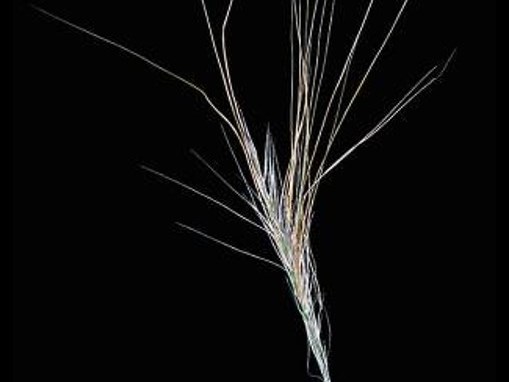
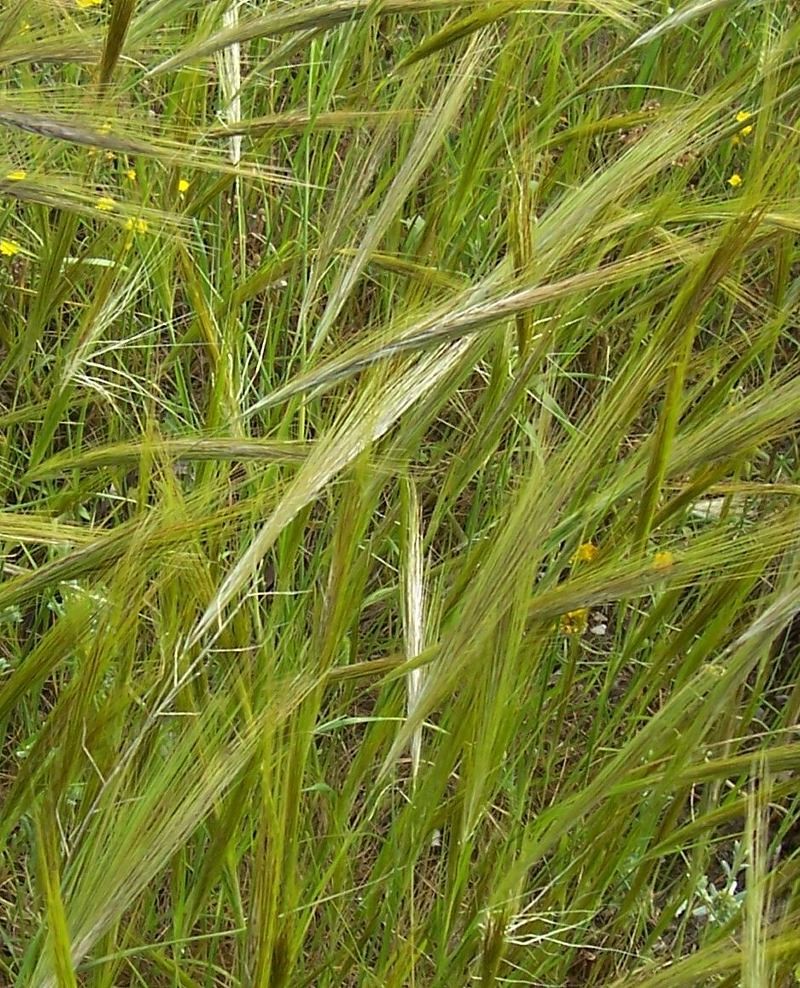
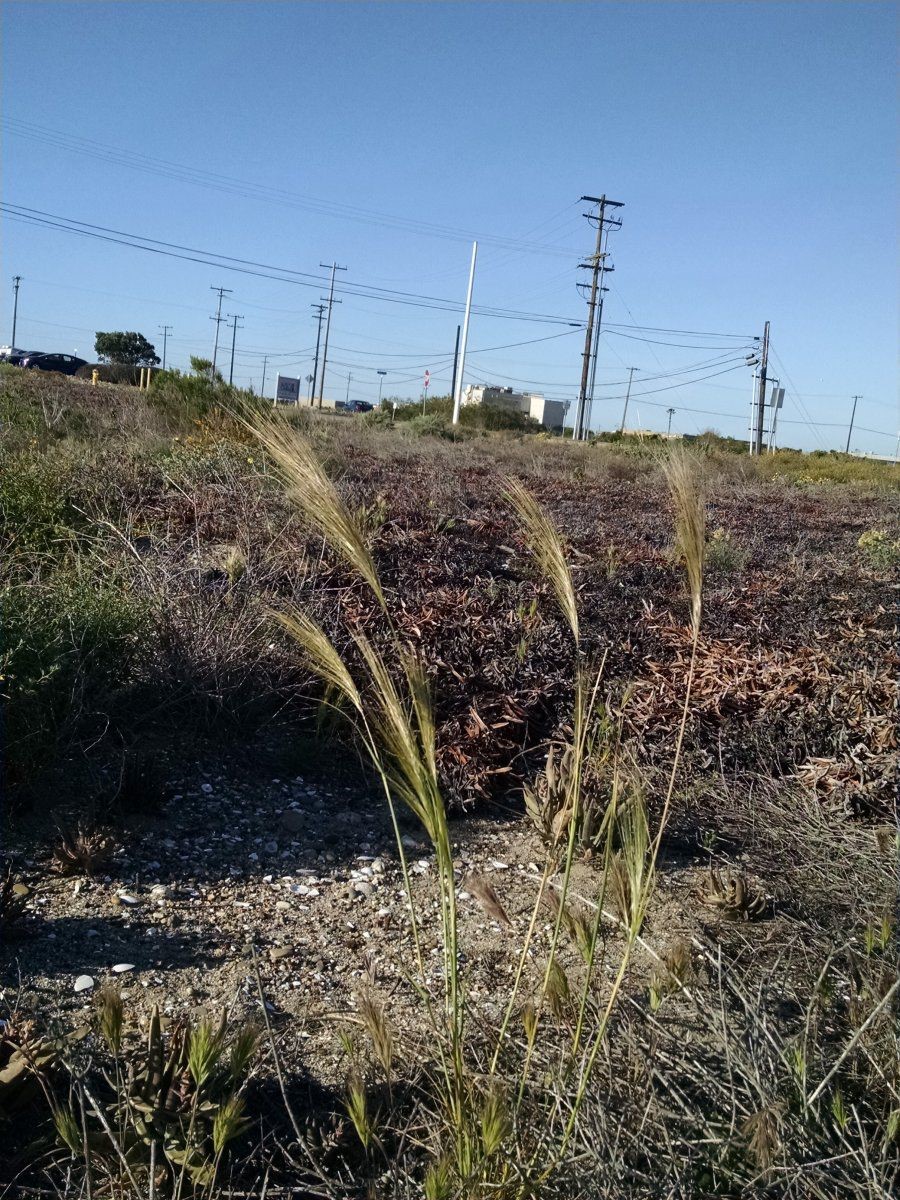
Stipa capensis (Cape ricegrass) is an annual grass (family Poaceae) native to the Mediterranean region that is naturalized in the Coachella Valley of the Sonoran Desert. It is spreading rapidly in the Palm Springs area and has the potential to promote fire in California desert ecosystems. Cape ricegrass typically grows 50 dm and is distinguished by annual habit, dense inflorescence, and exceptionally long, twisted awns. The sharp seeds of the plant can injure animals, and may attach to their fur as a dispersal mechanism. This invasive grass may also decrease native wildflower abundance.
High – These species have severe ecological impacts on physical processes, plant and animal communities, and vegetation structure. Their reproductive biology and other attributes are conducive to moderate to high rates of dispersal and establishment. Most are widely distributed ecologically.
Moderate – These species have substantial and apparent-but generally not severe-ecological impacts on physical processes, plant and animal communities, and vegetation structure. Their reproductive biology and other attributes are conducive to moderate to high rates of dispersal, though establishment is generally dependent upon ecological disturbance. Ecological amplitude and distribution may range from limited to widespread.
Limited – These species are invasive but their ecological impacts are minor on a statewide level or there was not enough information to justify a higher score. Their reproductive biology and other attributes result in low to moderate rates of invasiveness. Ecological amplitude and distribution are generally limited, but these species may be locally persistent and problematic.
Alert – An Alert is listed on species with High or Moderate impacts that have limited distribution in California, but may have the potential to spread much further.
Watch – These species have been assessed as posing a high risk of becoming invasive in the future in California.
A – A pest of known economic or environmental detriment and is either not known to be established in California or it is present in a limited distribution that allows for the possibility of eradication or successful containment.
B – A pest of known economic or environmental detriment and, if present in California, it is of limited distribution.
C – A pest of known economic or environmental detriment and, if present in California, it is usually widespread.
D – An organism known to be of little or no economic or environmental detriment, to have an extremely low likelihood of weediness, or is known to be a parasite or predator.
Q – An organism or disorder suspected to be of economic or environmental detriment, but whose status is uncertain because of incomplete identification or inadequate information.
* – An asterisk next to the rating indicates that a plant is included in the CCR Section 4500 list of California State Noxious Weeds.
-* – This plant is included in the CCR Section 4500 list of California State Noxious Weeds, but is otherwise not rated.
Stipa capensis Plant Assessment Form - Information gathered by Cal-IPC on the impacts, rate of spread, and distribution of invasive plants in California. Does not include management information.
Weed Management Notes
Management Notes - Information on management techniques and effectiveness from the University of California Cooperative Extension's Weed Research & Information Center.
Cal-IPC Newsletter Articles
There are no newsletter articles associated with this species yet.
Cal-IPC Symposium Presentations
Presentations are linked where available. Where a presentation is not available, find more information by reading the abstract in the Cal-IPC Symposia Archive.