
Officers | At-large | Student and Emerging Professionals Liaisons | Staff | In Memoriam
2026 Board of Directors – Officers
Alys Arenas, President
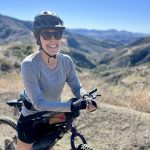
Originally from Southern California, Alys is an environmental scientist by training with a background in conservation biology and ecological restoration and monitoring. She has experience in environmental stewardship, permitting, implementing, and managing restoration projects, native plant propagation, rare plant monitoring, working with endangered species, non-native species removal, grant management and utilizing Geographic Information Systems (GIS) for conservation. Alys aims to facilitate conservation and ecological restoration using scientific research to bridge the gap between scientists, the community, and stakeholders. Her devotion to protect estuarine, Coastal sage scrub and riparian ecosystems was fostered in academics while dipping her toes in numerous wetlands and environmental nonprofits in southern California throughout her career. As a Reserve Manager with the California Department of Fish & Wildlife, Alys facilitates partnerships between NGO’s, Universities, State and federal agencies, and local organizations to help lead operations, restoration, and resource management across various Ecological Reserves in Northern Orange County. Alys holds a Bachelor of Science degree in Environmental Science & Policy and a Master of Science in Geographic Information Science (MSGISci) from California State University, Long Beach (CSULB).
Jason Giessow, Vice President
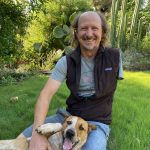 Jason earned an M.S. in Restoration Ecology from San Diego State University in 1996. He has worked on large-scale Arundo eradication and habitat restoration programs in California since the mid 1990s. His main priorities are: implementing accurate and inexpensive mapping programs, aiding regional groups in the development of top-down watershed-based eradication programs, and facilitating the development of streamlined permitting. While his work has focused on southern California, he has worked with the Monterey Resource Conservation District on a multi-phase Arundo removal project on the Salinas River, and is engaged in Cal-IPC’s efforts to map Arundo across the entire Central Valley.
Matt Major, Treasurer
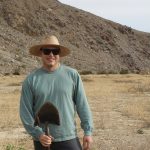 Matt is a Natural Resources Program Coordinator with OC Parks, where he leads habitat restoration, invasive species control, native seed program development, and ecological planning across more than 20,000 acres of protected wildlands in Orange County. He specializes in linking applied science with land management and is currently completing a Master of Science in Evolution, Ecology, and Organismal Biology at UC Riverside. Matt brings a background in public land stewardship, ecological contracting, and interagency coordination, and is passionate about advancing collaborative, landscape-scale conservation initiatives that address invasive species and enhance degraded habitats for endemic plants and wildlife. In his free time, Matt enjoys surfing, urban exploration, and spending time along California’s coast.
Michael Kwong, Secretary
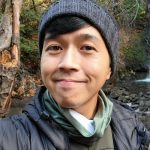 Michael is an Environmental Scientist with the California Department of Water Resources (DWR) where he is involved in environmental clearances, encroachment permitting, and GIS-related work across California. Prior to DWR, he worked at California State Parks, focusing on regulatory compliance, monitoring, outreach, and control efforts for invasive aquatic plants in the Sacramento-San Joaquin Delta and its southern tributaries. Michael holds a Bachelor of Science degree in Environmental Studies from California State University, Sacramento, in addition to Certificates in Field Ecology and GIS. Outside of work, he enjoys gardening with native plants, playing musical instruments, lounging around with his dogs, spending time at the Effie Yeaw Nature Center, and volunteering as a Snowy Plover Docent at Point Reyes National Seashore.
At-large Directors
Michelle Daneri
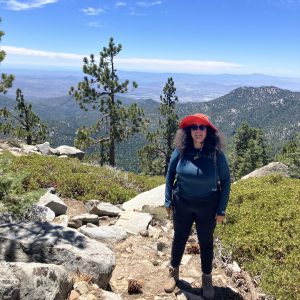 Michelle Daneri grew up in East Los Angeles and had her first exposure to the outdoors on family trips to the San Bernardino Mountains. While pursuing undergraduate and graduate study in Native American History, Michelle worked for California State Parks and interned with the Smithsonian Institute. After graduate school, Michelle worked as a Park Ranger for the city of Austin and this was her first exposure to land management. Here Michelle worked on conservation focused projects like invasive species removal, habitat restoration, supporting prescribed fire, and leading education programs for the public. Michelle went on to work treating invasive species in the Great Salt Lake Desert with the Bureau of Land Management. Since then Michelle has worked in the conservation Non-Profit space with Laguna Canyon Foundation, Pacific Crest Trail Association, and currently the National Forest Foundation. Michelle serves in a project management role focused on invasive species removal, fuels reduction, and biological survey projects in California’s National Forests. She is currently working to expand the National Forest Foundation’s capacity to implement habitat restoration projects locally. In her free time, Michelle enjoys spending time outdoors hiking, backpacking, botanizing, and working on her garden.
Sarah Godfrey
Sarah Godfrey has worked in wildland habitats and across highly urbanized landscapes throughout California, treating invasive species and developing partnerships to implement integrated plant control strategies. After working for non-profit Land Trusts for more than fifteen years, Sarah has expanded her scope of work to provide mapping and data management services to the greater global community. She combines significant field knowledge of flora and fauna monitoring methodologies with Remote Sensing and GIS capacity to understand change across multiple scales in ecological communities. Sarah has been restoring native plant communities and controlling invasive weeds since 2003, and maintained a Qualified Applicator Certificate with the Department of Pesticide Regulation throughout that time. Sarah has a B.A. in Environmental Studies (Conservation Biology) from University of California at Santa Cruz, and a M.S. in Geographic Information Science and Technology from the University of Southern California.
Alan Kaufman
 Alan is the Interim Deputy Director and Senior Director of Conservation for Laguna Canyon Foundation. He oversees LCF’s Habitat Restoration, Fuel Modification, Land Management and Trail programs. Alan has always been passionate about the outdoors and has spent a decent chunk of his life living and working there, including leading wilderness expeditions, working in wildland fire, trail and weed management crews and researching the use of prescribed fire and mechanical thinning to restore forest ecosystems. He has been with LCF since 2014. His greatest professional passion is to facilitate the development of meaningful, reciprocal relationships between people and the places that they live through hands-on land tending. When he’s not at work, he can generally be found spending time with family, practicing primitive skills, or making & repairing things in his garage.
Drew Kerr
Drew Kerr is currently the Treatment Program Manager for the California State Coastal Conservancy’s Invasive Spartina Project (ISP). Before joining ISP in 2005, when Estuary-wide Spartina treatment was just beginning, Drew was the Aquatic Noxious Weed Specialist for the King County Department of Natural Resources in Seattle, where he began his career in wetland ecology and invasive species management in 1999. During his years at KCDNR, Drew also worked on land use policy and regulation that established protected wildlife corridors and wetland complexes, and worked extensively with native Pacific Northwest amphibians. He received a BS in Environmental Policy & Behavior and a BA in Economics from the University of Michigan and holds a professional certificate in Wetlands Science and Management from the University of Washington. Drew’s first involvement with Cal-IPC was attending the annual symposium in 2005 and he has only missed one annual symposium since then. Drew has a passion for ecology, particularly wetlands and aquatic systems, as well as protecting these ecosystems from the impact of noxious weed invasions.
Metha Klock
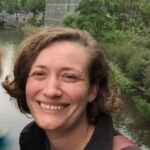 Dr. Metha Klock is the Preserve Ecologist at Pepperwood Preserve and has worked for over 20 years in the fields of land conservation, ecological restoration, and invasive species research and management. Metha received her Ph.D. in Biological Sciences from Louisiana State University (LSU), her M.S. in Forestry from LSU, and her B.A. in Liberal Arts from Sarah Lawrence College. She served as a Post-Doctoral Associate at Cornell University studying cover crops and sustainable agriculture and has taught courses in biological sciences, natural history, and ecological restoration at the University of Louisville, Mount Mercy University, the University of Iowa, and San José State University. As Pepperwood’s Preserve Ecologist, Metha provides project management of climate-ecosystem and ecological restoration monitoring projects and works with the research team to design and conduct monitoring practices that inform on-site natural resource conservation and adaptive management of the preserve.
Tanya Meyer
 Tanya Meyer is a Program Manager at the Yolo County Resource Conservation District in Woodland, CA. She grew up in the foothills of the Sierra Nevadas and went off to UC Davis to earn a B.S. and an M.S. in Community and Regional Development. She has been restoring native plant communities and controlling invasive weeds since 2000. Tanya has worked at Hedgerow Farms (California native plant seed producers), and the Center for Land-Based Learning’s Student and Landowner Education and Watershed Stewardship Program, doing restoration with high school students along the Sacramento River and tributaries. She worked at the YCRCD from 2006 – 2010 as a vegetation management specialist controlling invasive and noxious weeds and again since 2016 and is currently managing restoration projects and the newly resurrected Yolo County Weed Management Area. She also spent six years in Northern Central Pennsylvania controlling invasive plants along 45 miles of stream bank. Tanya holds a Qualified Applicator License and certifiably dislikes invasive plants.
LeeAnne Mila
 Deputy Agricultural Commissioner, Sealer of Weights & Measures, El Dorado County Agriculture Department
Lana Nguyen
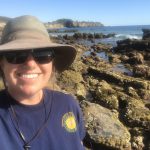 Lana hails from Southern California and spent time much of her youth in many local parks and beaches. After graduating from University of California, Santa Cruz with a BA in Environmental Studies and completing a tropical biology study abroad program in Costa Rica, Lana began working for California State Parks on the Natural Resource Management team in the Orange Coast District, where she learned the basics of habitat restoration and invasive plant management. Now a Senior Environmental Scientist (specialist) after a brief two year stint in the Santa Cruz District, Lana enjoys working on a variety of projects and subjects, including managing the invasive plant control and EDRR programs for Orange Coast, collaborating and coordinating with regional partners for invasive plant priorities across the Nature Reserve of Orange County, managing populations of nesting sensitive bird species including the California least tern and Western snowy plover, serving as a Resource Advisor during wildfire incidents locally and across the state, planning and implementing habitat enhancement and restoration projects, and working with partners and stakeholders in OC’s marine protected areas. Lana enjoys spending time with her son and husband exploring Orange County’s open spaces and beaches, watching baseball together and volunteering with the local Little League.
Scott Oneto
 Scott Oneto is a farm advisor with the University of California Cooperative Extension serving El Dorado, Amador, Calaveras and Tuolumne counties. Scott has been with UCCE since 1999 serving in various capacities as a researcher, educator, and administrator. He possesses a B.S. in Plant Sciences and a M.S. in Weed Science both from UC Davis. As a weed scientist much of his research focuses on developing weed control strategies and preventing the spread of non-desirable plants. Over the past twenty years, he has developed control strategies for several invasive weeds including Scotch broom, tree tobacco, hedge parsley, periwinkle, houndstongue, oblong spurge, skeletonweed, and several others. Scott lives in the gold rush town of Jackson with his wife Cheryl and their four-legged companions. During their free time they enjoy gardening, camping, hiking, biking, wine/beer tasting, and travelling the globe.
Isaac Ostmann
 Isaac grew up with a strong connection and love for the largely unnoticed local wild places in Orange County. The San Juan Creek was his backyard where he first encountered invasive plants, namely Arundo donax, though he knew it then not as a serious threat to ecosystem health, but rather, as an endless supply of great fort making material. After spending 3 years at UC Santa Cruz and a year abroad at the University of Auckland- New Zealand, he received a B.A. in American Studies, returned to his hometown, and began his career in land stewardship as a volunteer at an OC Wilderness Park. It was there he was turned on to the concept and practice of habitat restoration and invasive plant removal. While the scale of those efforts was small, the immediate impact of that work lit up something inside of him, and he saw that small groups of people, and even a single individual, could redirect the trajectory of degraded lands in a meaningful way. Isaac worked seasonally with California State Parks on a natural resource management crew for three years before finding a permanent position with the Irvine Ranch Conservancy, where he has worked for the last 17 years and now serves as the Program Manager for invasive species management.
Stephanie Ponce
 Stephanie Ponce is a Wildlife Biologist with a specialty in vegetation pest management. She works as a Vegetation Management Specialist with the California State Parks Division of Boating and Waterways and holds a state Pesticide Control Advisor (PCA) License. Stephanie is always inspired to protect wildlife habitat and provide and promote responsible weed management. Stephanie received her Bachelor’s in Wildlife Management and Conservation Biology at Humboldt State University and also attended Humboldt’s Secondary Education Credential Program in life science. Though Stephanie has not elected a career in education, she uses her educator skillset daily in her profession life as well as for her vernal pool and other outdoor volunteering endeavors and raising her two young daughters. After years of enjoying temporary assignments as a field biologist surveying flora and fauna of both terrestrial and marine habitats, Stephanie began her career with the CA Dept. of Fish and Wildlife (CDFW) working with the Natural Community Conservation Planning program in San Diego. It was her San Diego experience that drove her passion for land management and obtaining her PCA license. Stephanie now lives in Sacramento County with her husband and two daughters, where they enjoy all things outdoors, music, family, and friends.
Lauren Quon
 Lauren is a botanist in the Cleveland National Forest, where she enjoys planning and implementing various restoration and weed removal projects, and surveying and monitoring rare plants. Lauren holds a Bachelor of Science degree in Environmental Biology and a Master of Science degree in Biological Sciences from Cal Poly Pomona. Aside doting over her mini succulents and small patio garden, her other favorite past time is meandering through montane meadows and tracking the Laguna aster (Dieteria asteroides ssp. lagunensis) in the Laguna Mountains. Lauren is excited to assist in supporting the Cal-IPC mission and providing resources to students and land managers. She looks forward to connecting and sharing ideas with fellow Cal-IPC members!
Justin Valliere
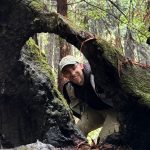
Justin Valliere is an Assistant Professor of Cooperative Extension in Invasive Weed & Restoration Ecology at UC Davis. His research and extension activities are motivated by a lifelong fascination with plants and a passion for conservation. He received his PhD in Plant Ecology from UC Riverside and completed postdoctoral fellowships at UCLA’s La Kretz Center for California Conservation Science and the University of Western Australia. He also has years of experience in on-the-ground invasive plant management and ecological restoration. His research uses knowledge in soil ecology and ecophysiology to inform restoration and understand mechanisms of plant invasion. Justin is committed to mentoring the next generation of land managers and applied ecologists as well as advancing equity, inclusion, and representation in the field.
Hannah Wallis
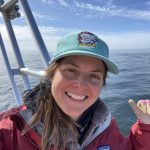
Hannah Wallis is an Ecologist specializing in Integrated Pest Management (IPM) with Midpeninsula Regional Open Space District. She contributes to the legacy of land stewardship throughout 72,000 acres of open space preserves in the Santa Cruz Mountains, which is her heart’s delight. Hannah has a B.S. in Ecology and Evolutionary Biology from U.C. Santa Cruz. Hannah’s first endeavors in IPM were through internships in college. She assisted with a placebo bait trial for eradication of rodents on a small island, evaluated biocontrol of yellow starthistle, and assessed pollinator preferences for native and non-native plants in Big Sur. Hannah built her career in IPM working with the Monterey County Agricultural Commissioner, first as an inspector, then leading the IPM program as Agricultural Programs Biologist. During this time, Hannah managed several populations of A-rated weeds, including Scotch thistle, skeletonweed and puna grass. Hannah became deeply involved in regional land stewardship efforts while coordinating the Monterey County Weed Management Area and serving on the planning committee of the Central California Invasive Weed Symposium for 10 years. These efforts earned her the Ryan Jones Catalyst Award for Wildland Stewardship from Cal-IPC in 2018 for inter-agency collaboration. Hannah thinks music is the best thing humans make and loves to howl at the moon with friends and family, around a bonfire, in the wilderness, near a river, where she can bask in the sun and swim all day.
Student and Emerging Professionals Section (SEPS) Liaisons
Anthony Dant
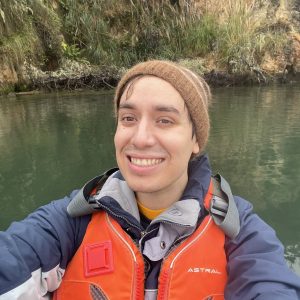
Anthony Dant is a 6th year PhD Candidate at the University of Arizona in the Ecology and Evolutionary Biology department. He currently is studying ecology and evolution of the invasive, annual plant Centaurea melitensis across urbanized California. During his PhD, Anthony has been involved in research within the Ornithology department at the Los Angeles Museum of Natural History and served as an ambassador at the Aspen Institute funded program Our Future is Science. Outside of research, Anthony can be found growing Dudleyas, participating in community science events, and attending concerts.
Marielle Simone Hansel Friedman
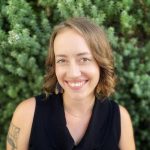
Marielle Hansel Friedman is currently a PhD Candidate in the Meineke Lab in the Department of Entomology and Nematology at the University of California, Davis. She studies anthropogenic effects on insects and ecologically important host plant species in Northern California. She is focused on artificial light at night (ALAN) as a driver of changing plant-insect interactions and insect communities. She also uses historical natural history specimens, natural and field experiments, and community science to explore patterns and mechanisms behind changing plant-insect interactions in the Anthropocene.
Elyse Hartman
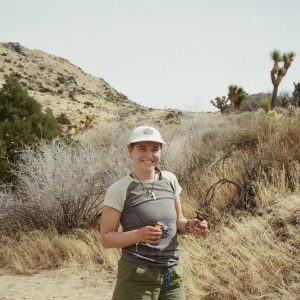 Elyse Hartman has a bachelor’s degree in Environmental Studies from UC Santa Barbara and has experience working in coastal sage scrub habitats. She is especially interested in weed management in coastal California and on the Channel Islands.
Madeline Holroyd
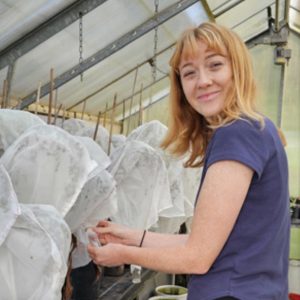
Madeline Holroyd is a Master’s student in the D’Antonio Lab at UC Santa Barbara, specializing in the ecology of biological control and plant-insect interactions. Her research examines complex tritrophic relationships among plants, galling insects, and other herbivores. For her thesis, Madeline investigates the invasive plant cape ivy (Delairea odorata) and its biological control agent Parafreutreta regalis, a gall-forming fly. Specifically, she studies how moth larvae that attack cape ivy galls influence the system, focusing on how gall formation affects plant secondary metabolite production and subsequent herbivory patterns. This work improves our understanding of how biological control agents alter plant chemistry and the broader herbivore community.
Umaina Khan
Umaina Khan is a graduate from UC Davis in Ecology, Evolution, and Biodiversity, and currently a Plant Technician at Putah Creek in the Davis/Winters area in Northern California. She serves as a Communications Coordinator Assistant for the SEPS. Her focus is to help engage student liaisons and the California Invasive Plant Council through external media. Her interests are hiking (her favorite being Black Mountain in the Peninsula Bay Area and birding (her favorite birds are the Asian koel found in India and puffins found mainly in Ireland), her favorite plant is the manzanita (it looks like apples when budding), and also loves video games and origami (she loves Nier Automata and the Uncharted series).
Sean Lee
 Sean Lee is a Bay Area–born environmental storyteller and communications professional whose work sits at the intersection of conservation, equity, and community engagement. He holds a B.A. from Tufts University in Environmental Studies and an Interdisciplinary Studies major he designed, Conservation Through Multimedia Storytelling, integrating ecology, film and media studies, anthropology, and environmental science, culminating into his thesis, Our Stories, Our Planet: Imagining a Sustainable and Equitable Planet Through Inclusive Representation and Diverse Narratives. Sean’s introduction to hands-on habitat restoration began at Grassroots Ecology, where he led restoration projects across local preserves, facilitated community programs, and integrated environmental justice into education and outreach. He has since worked across the environmental field, including at a statewide nonprofit (California Society for Ecological Restoration), a local water agency (Valley Water), and in the private sector (Foxconn), bringing a strong focus on storytelling, communications, DEIJ, project management, and community outreach to urban spaces and conserved lands alike. Passionate about reducing barriers to the environmental field and expanding access to green spaces, Sean is especially committed to mentorship and building more inclusive pathways into conservation. Outside of work, he enjoys kayaking and researching mythology and environmental narratives for some in-progress books.
Ruby Shaw
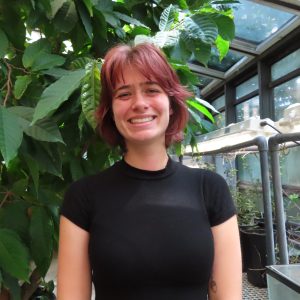 Ruby Shaw is a fourth-year undergraduate student at Mount Holyoke College, studying ecology and economics. She discovered her interest in restoration ecology through invasive species removal work with an AmeriCorps conservation crew in Oregon and Washington. Ruby’s research interests include the impacts of invasive plants on nutrient cycling and facilitative interactions among invasive species, which she is currently exploring in an honors thesis on invasive legumes. When not in school, she enjoys hiking and reading science fiction.
Allison Titus
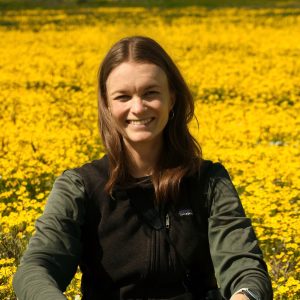
Allison Titus (she/her) is currently a graduate student in biological sciences at Sacramento State and a land steward at the Center for Natural Lands Management in the Central Valley. Raised in Mount Shasta, she has lived and worked throughout Northern California. After completing her undergraduate degree in Environmental Studies at UC Santa Cruz, she worked two field seasons as a vegetation technician on Mount Tamalpais. This experience inspired her conservation career and passion for California’s incredible flora. Her graduate research in the Kneitel Lab examines patterns of species and functional diversity in vernal pool plant communities along an inundation gradient. Allison strives to empower and connect with early career conservationists, especially in the land management field. When she’s not botanizing or birding, you can find Allison reading fiction, creating linocut block prints, and cooking big meals for friends and family.
Staff
Jutta Burger, Executive Director and Science Program Director

Jutta moved from Southern California to the Bay Area to join Cal-IPC in fall 2018. She has had a life-long fascination with plants and can date the germination of her interest in invasive species and conservation many years ago to a high school field trip to a small prairie preserve in the Palouse in eastern Washington. Formerly, she served as Managing Director of the Science and Stewardship Department at the Irvine Ranch Conservancy, which manages nearly 40,000 acres of open space in Orange County and where she oversaw their natural resource management staff and programs. Prior to joining the Conservancy, she sampled several different environments, completing a bachelor’s at Washington State University, a master’s at the University of Nebraska, a PhD at UC Riverside, and spending a year at the University of Georgia as a post-doctoral researcher. Her interests lie in understanding invasiveness from a biological, ecological, and evolutionary perspective, and in preserving our native ecosystems by properly prioritizing and implementing invasive control, developing native seed resources, and facilitating restoration. She previously served as Cal-IPC President and as Board Secretary. Email Jutta.
Kimberly Crispin, Conservation Specialist
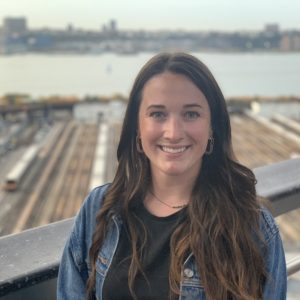 Kimberly joined the Cal-IPC team in 2026. Her love of plants began in childhood, exploring the rolling oak savannas of Ventura County, and deepened during her time at the University of California, Santa Barbara, where she earned a bachelor’s in Biology and worked in a plant ecology lab. After graduating, Kimberly worked as a gardener in public parks throughout the San Francisco Bay Area and later served as a Vegetation Ecologist with the East Bay Regional Park District. Following a move to rural Nevada County, she transitioned into an administrative role managing IPM grants for the California Department of Pesticide Regulation. In her free time, Kimberly enjoys rediscovering the beauty of the natural world through the eyes of her young daughter. Email Kimberly.
Agustín Luna, Director of Finance, Operations & Administration
Agustín is an administrative senior manager and executive with over 30+ years of experience. He has worked with professional non-profit arts organizations like the Hollywood Bowl, Cal Performances, South Coast Repertory, and is currently the Executive Director of Savage Jazz Dance Company. Agustín was the General Manager of Movement Strategy Center, where he oversaw finance, human resources, IT, operations, facility management, and the fiscal sponsorship program of the organization. Previously, Agustín worked with college students in UC Berkeley’s Student Music Activities Department and high school students in Oakland School for the Arts charter school, teaching the fundamentals of arts administration and management. Agustín is an avid salsa dancer and instructor, and is a presenter of salsa events through his company Agustín Luna Presents. He has danced Bomba y Plena with Bay Area Boricuas, assisted them in their initial organizing as a 501(c)(3) nonprofit corporation, and briefly served as their Managing Director. He was for 5 years the Board Treasurer of the 501(c)(3) non-profit Center for Media Justice, now known as Media Justice. Agustín is one of the last beneficiaries of California’s elementary school music program that ended in the mid-1980s and has played his trumpet continuously since 1982. He hopes that music in the schools does not disappear and supports efforts to keep it alive. Email Agustin.
Amanda Cantu Swanson, Grants & Contracts Manager
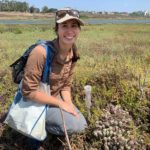 Amanda joined the Cal-IPC staff in January 2024 after serving four years on the Cal-IPC Board of Directors. Amanda’s interest in plants, and especially the interactions between native and invasive plants, began while hiking throughout California in her early 20s. This motivated her to pursue a career in ecology and land management. Her most recent professional appointment involved managing four Ecological Reserves in Orange County with the California Department of Fish and Wildlife, where she managed invasive species, conducted plant and wildlife surveys, and implemented multiple restoration projects. In September 2017, she received a PhD from UC Riverside which was followed by a postdoctoral position at the University of Wyoming. She has also spent time teaching Biology at local community colleges. Outside of work, Amanda has many interests but most enjoys spending time outdoors, playing music, and making food with her husband and two young sons. Email Amanda.
Manisha Tamrakar, Finance & Operations Specialist
Constance Taylor, Conservation Specialist
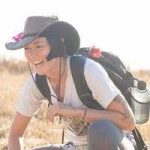 Constance leads training and workforce development programs for Cal-IPC. She grew up in Ohio and spent her free time as a kid harassing bugs, climbing trees, and pretending to be a witch. One of her favorite places to make potions out of mud and twigs was under the cave-like boughs of a shrub she dearly loved — which she now knows as the highly invasive Amur Honeysuckle (Lonicera maackii). As she grew up, life took her on a winding path — she explored careers as an editor at a comic book publishing company, a muralist, and a car mechanic; she traveled the world and had opportunities to be involved in trail crews in Appalachia, an endangered wallaby breeding program in Australia, a feminist comic book shop in New Zealand, a lion research project in Mozambique, and a community muralist at a women’s shelter in Guatemala. All this time, Constance kept learning about the ecologies around her, realizing that many of the plant species she saw in her travels were starting to look familiar because she was seeing them everywhere. Thus began a long-standing fascination with invasive organisms and IPM principles! Since moving to Oakland in 2010, Constance has worked with dozens of environmental organizations around the Bay Area. She brings to Cal-IPC 15+ years of experience tailoring information to audiences; blending cultural literacy and JEDI principles into environmental education; providing naturalist outreach and adult-centered education; and developing, coordinating, and marketing programs. Email Constance.
Nikki Valentine, Conservation Specialist
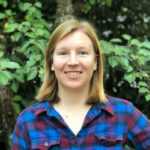
Nikki provides GIS analysis and project support in developing management plans and regional priorities. She is a graduate of Reed college in Portland, Oregon, where she earned a Bachelor’s of Science in Biology. Since graduating she has held several positions collecting ecological data throughout the Great Basin Region. She has partnered with agencies such as the Bureau of Land Management and Nevada Department of Wildlife to collect rangeland health data in support of nationwide monitoring programs. She has also supported the Seeds of Success program in the collection and documentation of plant materials throughout Nevada. The seed she collected is being put to use in restoration and research studies throughout the Great Basin region. Outside of work, Nikki enjoys spending time in the Sierra Nevada snowboarding and botanizing. Email Nikki.
Doug Johnson, Executive Director Emeritus
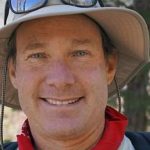
Doug became Cal-IPC’s first staff person in 2002. He holds an M.A. in Geography from San Francisco State University with an emphasis on conservation biology, GIS, and perceptions of wilderness. He is a Switzer Environmental Fellow. Doug also holds an M.S. in Mechanical Engineering from Stanford University. He has worked in wildland weed control with California State Parks and The Nature Conservancy, and as a private consultant. Other work experience includes municipal energy conservation, engineering design, environmental and science education. Doug served as the first chair of the California Invasive Species Advisory Committee, and currently serves as treasurer for the National Association of Invasive Plant Councils. He is a founding member of the California Horticultural Invasives Prevention (Cal-HIP) partnership and the PlantRight partnership. In his spare time, Doug plays soccer and has fun with two sons. Email Doug.
In Memoriam
Bertha McKinley, Operations Specialist
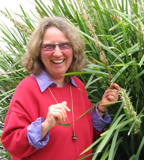
Bertha passed away suddenly in September, 2025. She had volunteered and worked for Cal-IPC for over twenty years. She was an avid gardener using mostly natives who came to Cal-IPC in 1992 after recognizing the threat posed by invasive plants to native plant habitats. She started volunteering in our office in 2004 and became part-time staff supporting various programmatic, fundraising, and administrative efforts. She held a B.A. in English (with a minor in Biology) and an M.A. in Education from UC Berkeley. She was formerly president of the San Diego Chapter of the California Native Plant Society, served on its state board and as a chair of the CNPS poster program. She loved dogs and cats and volunteered in the canine training program at the Berkeley-East Bay Humane Society. The Cal-IPC staff, board, and community miss her spirit and dedication.